
What Is a Biomarker and Why Does It Matter?
A biomarker is a measurable physiological data point that reflects what’s happening inside your body at any given moment. It can be as simple as your blood glucose level or as complex as your heart rate variability index.
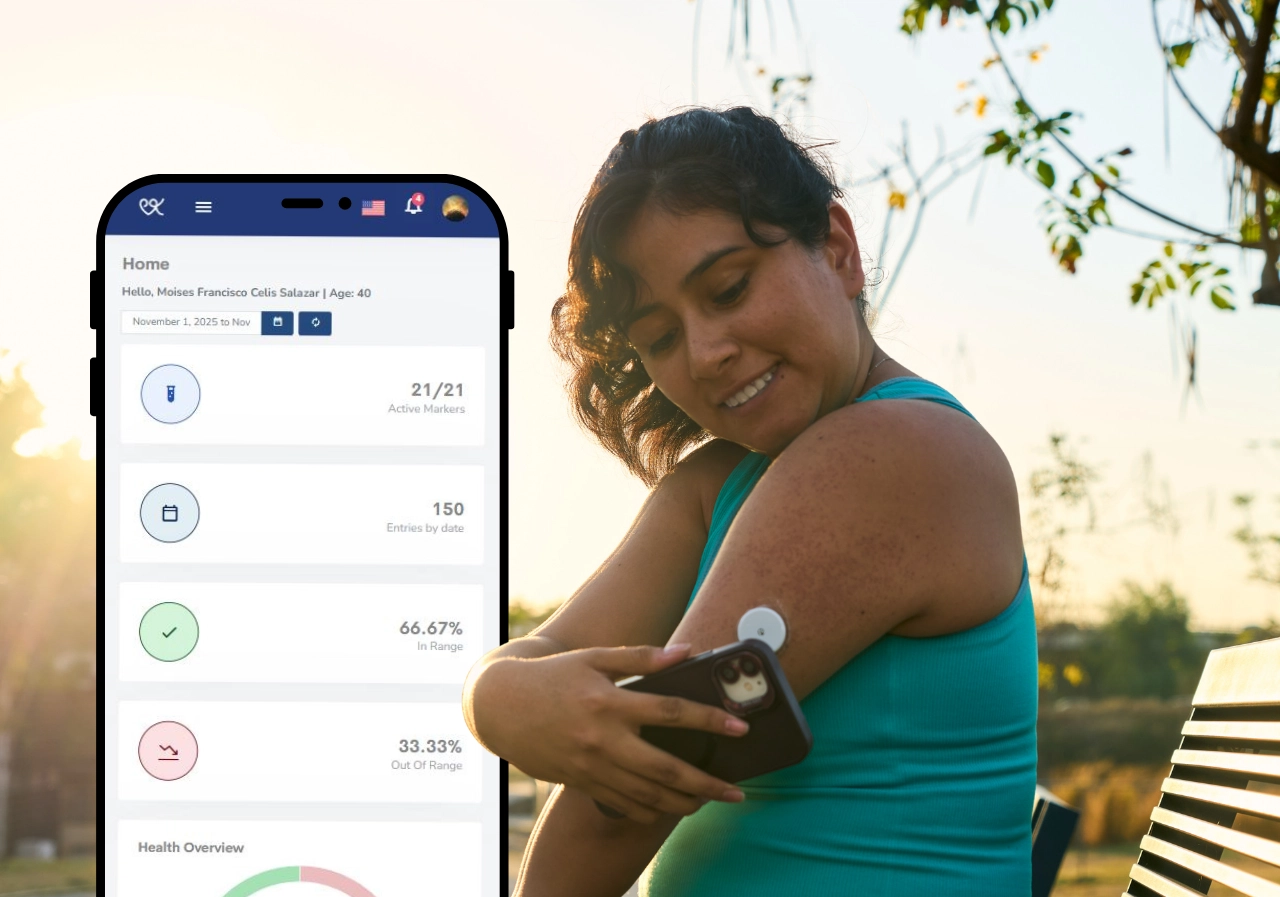
At VITAKEE, we focus on biomarkers you can track at home—no lab work or medical appointment required. Learning to interpret these numbers is the first step toward taking control of your health in a preventive, personalized, and continuous way.
Glucose: What Do Your Numbers Mean?
What does it measure?
Blood glucose reflects the amount of sugar circulating in your body. It’s the brain’s primary fuel, but chronically high levels trigger inflammation, fatigue, and vascular damage.
Reference ranges (healthy adult):
- Fasting: 70–90 mg/dL
- 1h post-meal: < 140 mg/dL
- 2h post-meal: < 120 mg/dL
What should you look for?
- Does it spike too high after eating (peak >140)?
- Does it take too long to come back down (more than 2 hours)?
- Do you wake up with elevated glucose (>100)?
Practical interpretation in VITAKEE:
If you see high fasting levels or frequent spikes after high-carb meals, you may be losing insulin sensitivity. You can reduce these peaks by eating protein first or walking after meals.
Ketones: Are You Burning Fat?
What does it measure?
Ketones are byproducts of fat burning. Your body produces them when glucose drops and it needs an alternative energy source. They’re not dangerous—on the contrary, when well-managed, they can offer metabolic and cognitive benefits.
Common values (in blood):
- 0.1–0.4 mmol/L: not in ketosis (normal)
- 0.5–1.4 mmol/L: nutritional ketosis
- 1.5–3.0 mmol/L: optimal ketosis for fat loss / mental clarity
- ~3.5 mmol/L: deep ketosis (may occur in extended fasting or therapeutic ketosis)
What should you look for?
- Do you produce ketones after fasting or during training?
- Do they increase when you reduce carbohydrates?
Practical interpretation:
A ketone value above 0.5 mmol/L indicates you’re accessing your fat stores. If your goal is body recomposition, tracking this helps confirm whether your strategy is working.
Lipid Profile: How Is Your Cardiovascular Health?
What does it measure?
- Triglycerides: fats in circulation. High = cardiovascular risk.
- HDL cholesterol: the “good” one. Protective.
- LDL cholesterol: the “bad” one. Risky if oxidized or paired with high triglycerides.
- Total cholesterol: overall sum; not always a direct risk indicator.
- Non-HDL cholesterol: a more useful marker for prevention.
Ideal values (mg/dL):
- Triglycerides: < 100
- HDL: > 50
- LDL: < 100
- Total cholesterol: < 180
- Non-HDL: < 130
Practical interpretation:
A risky pattern includes: high triglycerides + low HDL + large waist circumference.
If your triglycerides are above 150, it’s time to take actionable steps (improving diet, better sleep, reducing sugar).
Body Composition: More Than Just Weight
What does it measure?
- Body fat (subcutaneous or visceral)
- Muscle mass
- Total body water
- Body Mass Index (BMI)
What should you look for?
- Are you losing weight but also losing muscle? Not a good sign.
- Do you have solid muscle mass and elevated ketones? You’re on the right track.
- Do you have abdominal fat plus elevated fasting glucose? That indicates insulin resistance risk.
Practical interpretation:
The number on the scale matters less than your composition. Tracking your abdominal fat percentage and muscle mass in VITAKEE helps determine whether your weight loss is actually healthy.
General Tips for Tracking in VITAKEE
- Always measure under similar conditions: fasting, after sleep, or 2 hours after eating.
- Add comments for context (“ate oatmeal”, “slept poorly”).
- Don’t obsess over single data points—trends are what count.
- Use the charts to spot correlations: When do you feel most tired? Most inflamed?
Conclusion
Your data speaks. You just need to learn how to listen.
VITAKEE is not a replacement for your doctor. It’s a tool that empowers you to stay in control, make informed decisions, and turn your habits into real outcomes. Measuring is the first step to improving.